Brent Council rules for hedge trimming in Cricklewood: what homeowners and landlords need to know
If you are trying to make sense of Brent Council rules for hedge trimming in Cricklewood, you are probably dealing with one of those jobs that sounds simple until you actually stand there with secateurs in your hand. Hedge looks untidy, neighbours notice, the pavement feels cramped, and you want to do the right thing without upsetting anyone. Fair enough.
The good news is that most hedge work in Cricklewood is straightforward when you understand the basics: keep growth under control, avoid blocking footpaths or driveways, stay safe near roads, and respect boundaries. The slightly annoying bit? The details can vary depending on whether the hedge is in a front garden, beside a pavement, shared with a neighbour, or growing near trees and protected planting. This guide breaks it down in plain English, with practical steps, common mistakes, and the kind of local advice that saves time later.
To make planning easier, we have also included a simple comparison table, a practical checklist, and answers to the questions people usually ask once they realise hedge trimming is not always a quick Saturday job. If you need broader garden help as well, you may find our garden maintenance and garden clearance services useful alongside regular hedge care.
Table of Contents
- Why Brent Council rules for hedge trimming in Cricklewood matters
- How Brent Council rules for hedge trimming in Cricklewood works
- Key benefits and practical advantages
- Who this is for and when it makes sense
- Step-by-step guidance
- Expert tips for better results
- Common mistakes to avoid
- Tools, resources and recommendations
- Law, compliance, standards, or best practice
- Options, methods, or comparison table
- Case study or real-world example
- Practical checklist
- Conclusion
- Frequently asked questions
Why Brent Council rules for hedge trimming in Cricklewood matters
Brent Council rules matter because hedge trimming is not just about keeping a garden neat. In a busy place like Cricklewood, a hedge can affect visibility, pedestrian access, neighbour relations, and even whether a path feels genuinely safe to use. A hedge that grows too far out can make a pavement feel narrower than it is. That sounds minor until a pram, wheelchair, delivery trolley, or cyclist is trying to pass. Then it matters, quickly.
There is also the everyday reality of shared boundaries. One person sees a hedge as their privacy screen; another sees it leaning into the light or dropping leaves into the gutter. If you work with the rules in mind, you reduce friction before it starts. That is usually cheaper than arguing after the fact. Honestly, nobody wants a civil row over a laurel hedge.
Local guidance is also useful because Brent, like other London boroughs, expects residents to keep planting under control where it affects public space, access, or safety. You do not need to memorise a pile of legal wording. You do need a sensible routine, a clear understanding of who owns what, and a little judgment about timing. In our experience, that is where most problems are avoided.
Expert summary: Keep hedges trimmed before they obstruct paths, roads, sightlines, or neighbours' enjoyment, and treat boundary work as a communication job as much as a gardening job.
How Brent Council rules for hedge trimming in Cricklewood works
The practical side is simpler than the phrase makes it sound. Most hedge trimming in Cricklewood comes down to three questions: where is the hedge, who is responsible for it, and what effect is it having on the surrounding area?
First, location. A hedge in a private back garden is usually a private matter, provided it is not affecting a neighbour or a protected tree. A hedge on the edge of a front garden, however, can have public consequences if it overhangs the pavement. A hedge close to a road can affect visibility for drivers and pedestrians. The closer the hedge is to shared space, the more carefully you should handle it.
Second, ownership. The person who owns or controls the hedge is generally responsible for maintaining it. That sounds obvious, but in shared developments, rental homes, and older properties in Cricklewood, the boundary line is not always immediately clear. If you are unsure, check deeds, ask the landlord or managing agent, or speak with the neighbour before you cut anything.
Third, impact. Councils are usually concerned when vegetation blocks a path, creates a visibility issue, or causes a nuisance that could have been prevented with routine maintenance. A hedge that is merely a bit shaggy is one thing. A hedge forcing people into the road is something else entirely.
The safest rhythm is simple: inspect regularly, trim lightly and often, and avoid letting a hedge become a seasonal emergency. If the job is bigger than hand tools and a quick tidy, professional hedge trimming support can help keep everything neat without turning it into a weekend that lasts three weekends.
Key benefits and practical advantages
Staying on top of hedge trimming rules offers more than compliance. There are a few real-world advantages that people notice almost immediately.
- Safer access: Footpaths, gates, bins, and driveways remain easier to use.
- Better kerb appeal: A tidy hedge instantly improves the look of the property, especially on streets where front gardens are visible from the road.
- Fewer neighbour disputes: Small trims done early are much easier than dealing with overgrowth later.
- Healthier hedges: Regular, measured pruning often produces better shape and denser growth than rare heavy cuts.
- Lower risk of damage: You reduce the chance of branches snapping, blocking drains, or tangling with fences and garden structures.
There is another benefit that gets overlooked: you make future maintenance much easier. A hedge that is allowed to run wild for a year can become hard to reshape without leaving awkward gaps. To be fair, it is the same with a lot of garden work. Keep on top of it and life is calmer. Let it slide and everything gets twice as stubborn.
For properties undergoing wider improvement, hedges often fit into a broader maintenance plan alongside landscaping, lawn care, or seasonal tidy-ups. That is often the moment people realise the garden feels better not because of one big transformation, but because the small things finally line up.
Who this is for and when it makes sense
This guidance is relevant for a few different people in Cricklewood. Homeowners are the most obvious group, but they are not the only ones who need to think about hedge rules.
- Homeowners: Especially those with front hedges facing pavements or roads.
- Landlords and letting agents: Useful where a rental property needs regular external upkeep.
- Tenants: You may need permission before trimming boundary hedges, depending on the tenancy agreement.
- Property managers and residents' associations: Shared gardens and communal boundaries often need a consistent standard.
- Older residents or busy families: Practical hedge maintenance can be one of those jobs that slips, then suddenly becomes urgent.
It also makes sense if you are preparing to sell, renovating a garden, or sorting out a property after a period of neglect. A hedge can quietly drag down the whole appearance of a home. You might not notice it day to day, but buyers, visitors, and neighbours absolutely do. Slightly unfair, maybe. True all the same.
If hedge work is only one part of a larger garden reset, services like garden maintenance or even a more comprehensive tidy through services overview can help you plan the job sensibly instead of tackling it piecemeal.
Step-by-step guidance
Here is the most practical way to approach hedge trimming in line with Brent Council expectations and general good practice.
- Inspect the hedge from all sides. Check how far it spreads, whether it blocks a pavement, and whether any branches are crossing a boundary.
- Identify the hedge type. Formal hedges, informal shrubs, and mature boundary hedges all behave differently when cut. Some recover quickly; others do not.
- Check for safety issues. Look for power lines, unstable ladders, hidden garden furniture, uneven ground, and nesting birds in season.
- Confirm ownership and permissions. If the hedge sits on a boundary, talk to the neighbour first. It avoids awkwardness later.
- Trim gradually. Remove little and often rather than taking a huge amount off at once. Sharp, layered cuts are usually better than one aggressive chop.
- Clear debris properly. Sweep paths, bag waste, and keep cuttings from blocking drains or spilling onto the pavement.
- Review the result. Step back from the hedge and check for lines, balance, and any overhang still affecting access.
A small but useful habit: take a quick photo before you start. It gives you a reference if you are managing a shared hedge or trying to remember what looked wrong in the first place. Not glamorous. Very handy.
Expert tips for better results
Good hedge trimming is part skill, part timing, part restraint. The temptation is to keep cutting until it looks very, very neat. Then suddenly you have gone too far and the hedge looks bald on one side. We have all seen it.
Trim more often, not harder. Light, regular maintenance is usually kinder to the plant and easier on your shoulders. If a hedge is already overgrown, split the work into stages rather than forcing one brutal session.
Work from the top down. That helps keep the hedge shape even and reduces the chance of making the base too narrow too early.
Use the right season for the right plant. Different hedges respond differently, and wildlife sensitivity matters too. If you are unsure, be cautious about heavy cuts during nesting season and avoid disturbing active bird nests.
Keep the base slightly wider than the top. This lets light reach the lower growth. It is a tiny detail that makes a surprising difference over time.
Respect the street view. If the hedge fronts a pavement, imagine it from a pedestrian's eye line. What looks "fine" from the garden can feel cramped from the road.
Do not force the hedge into a geometric shape it never wanted. Some hedges suit crisp lines. Others look better with a gentler profile. Nature, annoyingly, does have opinions.
Common mistakes to avoid
Most hedge-related complaints come from a handful of avoidable mistakes. The good news is that they are all fixable once you know what to look for.
- Leaving it too long: A hedge that has not been maintained for ages becomes harder to cut safely and neatly.
- Overcutting one side: This is common when trying to "catch up" quickly. It can leave bare patches.
- Ignoring the pavement edge: Even if the garden side looks tidy, the street side may still be causing an issue.
- Using blunt tools: Ragged cuts can stress the plant and make the hedge look messy for longer.
- Skipping neighbour conversations: If the hedge sits on or near a boundary, silence often creates assumptions. Assumptions are never great.
- Forgetting waste removal: Cuttings left on public paths or in driveways create an untidy finish and a slip risk.
- Trying risky ladder work alone: Tall hedge work is one of those jobs where a small wobble becomes a big day very quickly.
A separate trap is confusing hedge trimming with tree work. If the plant is actually a tree or has major limbs, the job may be closer to pruning or tree lopping and removal. That distinction matters for both safety and the right equipment.
Tools, resources and recommendations
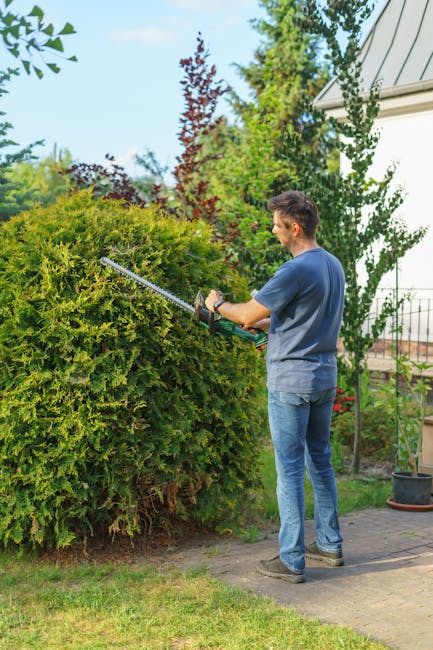
You do not need a van full of equipment to keep a hedge under control, but you do need the right basics. A decent pair of shears, secateurs, gloves, eye protection, and a stable step platform can go a long way. For larger hedges, powered trimmers may be appropriate, but only if you are comfortable using them safely.
Practical supplies worth having ready:
- sturdy gloves
- protective glasses
- hedge trimmer or manual shears
- loppers for thicker stems
- tarpaulin or garden sacks for cuttings
- brush or broom for clearing paths
- basic measuring tape if you want to keep lines even
If you are arranging work around a full garden tidy, it can help to pair hedge trimming with lawn mowing or planned garden clearance. That tends to create a cleaner final result than tackling one bit now and another bit next month. Less back-and-forth. Less mess.
For service planning, it is also worth checking practical pages like pricing and quotes and contact us when you are ready to discuss the scale of the job. If you want to understand the business behind the service, about us gives a useful sense of approach and standards.
Law, compliance, standards, or best practice
For hedge trimming in Cricklewood, the key point is to follow local expectations and general UK garden maintenance best practice without trying to be overly clever about it. You do not need to turn it into a legal dissertation.
Public access: Hedges should not obstruct pavements, gates, or safe passage. If a hedge affects a public footway or road, you should act promptly.
Boundary respect: Never assume a hedge on a line belongs only to one side. Shared boundaries can be sensitive, and cutting without agreement can create a dispute very quickly.
Wildlife care: Be careful not to disturb nesting birds or other wildlife. If there is any sign of nesting, pause and reassess. That is one of those moments where restraint is the right answer.
Health and safety: Tall or dense hedges can hide hazards. Our health and safety policy explains the kind of care expected on professional jobs, and insurance and safety is worth reviewing if you are comparing providers or arranging work at height.
Responsible disposal: Cuttings should be managed properly, especially if a pile is likely to block access or blow onto neighbouring property. Good practice also means reducing waste where possible and recycling green material sensibly. If that side of things matters to you, our recycling and sustainability page is a useful read.
One more subtle point: compliance is not only about avoiding problems. It is about showing that you are a considerate neighbour and a careful property owner. That counts for a lot in a tightly packed London street.
Options, methods, or comparison table
Not every hedge needs the same approach. The best method depends on size, height, growth rate, and how much precision you need.
| Method | Best for | Pros | Trade-offs |
|---|---|---|---|
| Manual shears | Small decorative hedges and fine shaping | Very precise, low noise, good control | Slower and physically tiring |
| Electric hedge trimmer | Medium hedges and routine maintenance | Fast, efficient, consistent finish | Needs safe handling and power access |
| Petrol trimmer | Larger or denser hedges | Powerful and suitable for tougher growth | Noisier, heavier, more maintenance |
| Professional trimming service | Tall, awkward, or heavily overgrown hedges | Safer for difficult jobs, better finish, less personal hassle | Higher cost than DIY |
For a small front hedge, manual tools can be perfect if you have the time and patience. For a long boundary hedge, a powered tool or professional service is usually the better choice. And for a hedge near a public pavement with awkward angles? That is often the point where people realise it is not really a simple DIY task after all.
Case study or real-world example
A typical Cricklewood scenario goes like this. A homeowner notices that their front hedge has crept over the pavement edge by late summer. Nothing dramatic. Just enough that pedestrians are brushing past the outer growth, and the bin collection crew has started nudging branches aside. A neighbour says, politely enough, that the hedge is making the path feel tight.
Instead of waiting for the hedge to become a bigger issue, the homeowner measures the overhang, trims it back in stages, and clears the pavement thoroughly afterwards. They keep the top level, taper the sides slightly, and avoid cutting back too hard near the stems. The result looks tidy, the path feels open again, and the hedge keeps its shape rather than looking hacked at.
The important thing here is not perfection. It is timing. One early, sensible trim solved a problem that would have become more visible and more annoying a month later. That is the real value of knowing the rules and acting before anyone has to complain.
In a slightly different case, a landlord managing a rental property in Cricklewood arranged hedge maintenance together with garden tidying and lawn care before a new tenancy began. That avoided the awkward "it will be fine next week" stage that never really ends up fine. The whole place looked cared for, and the outside matched the standard inside. Simple, but powerful.
Practical checklist
Use this quick checklist before you trim:
- Check whether the hedge affects a pavement, road, or neighbour boundary.
- Confirm who owns or is responsible for the hedge.
- Look for nests, wildlife activity, or hidden hazards.
- Choose the right tool for the hedge size and thickness.
- Make sure ladders or platforms are stable if height is involved.
- Trim a little at a time rather than removing too much at once.
- Keep the hedge shape slightly wider at the base.
- Clear all cuttings from paths, driveways, and borders.
- Review the hedge from the street side as well as the garden side.
- Talk to your neighbour if the hedge sits on or near a shared boundary.
Quick reminder: if the job feels awkward before you start, it will probably feel even awkwarder halfway through.
Conclusion
Brent Council rules for hedge trimming in Cricklewood are really about common sense backed by local responsibility. Keep access clear, trim with care, respect boundaries, and think about the people who use the space as much as the hedge itself. That is the heart of it.
For many homes, a regular trim is enough. For larger or neglected hedges, a more deliberate approach saves time, avoids disputes, and gives you a better finish. Either way, the best outcome is the one that feels calm, tidy, and unproblematic. Which, let's face it, is exactly what most people want from garden work.
If you are planning hedge work alongside other outdoor improvements, it can help to look at the full picture rather than treating every job separately. A neat hedge, a tidy lawn, and a clear path have a way of making the whole property feel lighter. And that is a nice thing to come home to.
Get a free quote today and see how much you can save.
Frequently Asked Questions
Do I need permission from Brent Council to trim my hedge in Cricklewood?
Usually, no permission is needed for routine trimming on private property. The main concern is whether the hedge affects a public pavement, road, or protected planting. If in doubt, check the situation carefully before cutting.
What happens if my hedge is blocking the pavement?
If a hedge blocks or narrows a pavement, you should trim it back promptly. Councils and neighbours generally expect private hedges not to obstruct safe access. Leaving it too long can make the situation more difficult and more noticeable.
Can I cut a hedge right back in one go?
You can, but it is not always a good idea. Heavy cuts can stress the hedge and leave it looking patchy. Most hedges do better with gradual trimming over time, especially if they have been neglected.
Who is responsible if a hedge sits on a boundary line?
Boundary hedges can be shared or controlled by one property, depending on ownership and deeds. It is wise to check before cutting and to speak with the neighbour if the hedge clearly affects both sides.
Is there a best time of year to trim hedges in Cricklewood?
The best timing depends on the hedge type and the level of growth. In general, avoid disturbing active wildlife and be cautious during nesting season. Light, regular maintenance tends to be easier than waiting for one big seasonal cut.
What tools are best for hedge trimming at home?
For smaller hedges, manual shears and secateurs may be enough. Medium hedges often suit an electric trimmer, while tall or dense hedges may need more powerful equipment or professional help.
How do I know if my hedge needs professional help?
If the hedge is very tall, awkward to reach, close to a road, or heavily overgrown, professional help is usually the safer option. It is also useful if you want a neater finish without risking unstable ladder work.
Does hedge trimming count as tree work?
Not usually, but sometimes people call a woody plant a hedge when it is actually more like a small tree or has thick limbs. If the job involves major branches rather than hedge growth, tree-focused work may be more appropriate.
What should I do with hedge cuttings?
Cuttings should be gathered up, bagged, composted, or otherwise disposed of properly. Do not leave them on pavements or let them spill into shared access areas. A tidy finish matters almost as much as the cut itself.
Can hedge trimming affect my neighbour's light or privacy?
Yes, it can. That is why it helps to have a conversation before making major changes, especially on boundary hedges. A sensible trim often preserves privacy while improving shape and access.
How often should a hedge be trimmed in a residential area?
That depends on the hedge species and growth rate, but many residential hedges benefit from regular light maintenance rather than rare major cuts. If a hedge starts to encroach on paths or feel unkempt, it is probably due for attention.
Where can I find help with hedge trimming and broader garden care?
If you want support beyond a one-off cut, look at our hedge trimming, garden maintenance, and services overview pages, then decide what fits your garden best. Sometimes a bit of structure is all it takes.